There are predictable stages that all living things go through. They can be very similar between different animals, and there can be interesting outliers, During the course of this 9 lesson unit, students will look at their own developmental stages, and compare that to other animals (mammals, and insects) and plants.
Living things grow, change and have offspring similar to themselves
Science involves observing, asking questions about, and describing changes in, objects and events
People use science in their daily lives, including when caring for their environment and living things
Observes, questions and collects data to communicate and compare ideas
Uses materials, tools and equipment to develop solutions for a need or opportunity
Describes observable features of living things and their environments
Identifies how plants and animals are used for food and fibre products
Recognises observable changes occurring in the sky and on the land and identifies Earth’s resources
People use science in their daily lives
Students will:
 Lesson 1
What are Living Things
Lesson 1
What are Living Things
In this lesson students will investigate living things and how a living thing goes through different stages.
 Lesson 2
Growing
Lesson 2
Growing
In this lesson students will learn the different stages of life humans go through, more specifically the juvenille stage.
 Lesson 3
Sharing Growth Stories
Lesson 3
Sharing Growth Stories
In this lesson students will take a closer look at how they have changed from the time they were born.
 Lesson 4
What Comes Next?
Lesson 4
What Comes Next?
In this lesson students will learn about the life stages that they haven't gone through yet. It also expores how we grow and develop compared to other living things.
 Lesson 5
Animal Stages
Lesson 5
Animal Stages
In this lesson students will investigate the life cycle stages of insects and marsupials.
 Lesson 6
Plants
Lesson 6
Plants
In this lesson students will look at the different life stages of plants.
 Lesson 7
Babies and Eggs
Lesson 7
Babies and Eggs
In this lesson students will investigate the how animals are born.
 Lesson 8
Just Genes
Lesson 8
Just Genes
In this lesson students will learn about how we grow and develop based on genetics.
 Lesson 9
Growth and Change Assessment
Lesson 9
Growth and Change Assessment
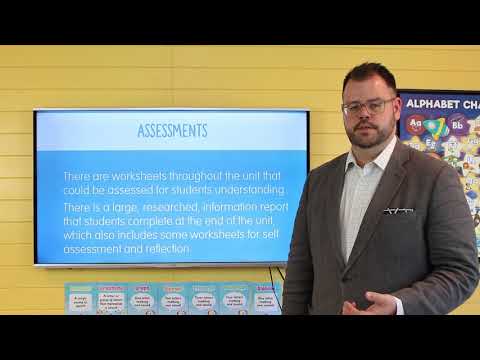
This assessment will span two lessons, in which students will research and complete a workbook based on their favourite animal.
The WALT, WILF & TIB posters were created by request and consist of 14 pages including: WALT - We are learning to... WILF - What I'm...
The Properties of Living Things posters will help students identify characteristics of living things such as breathing, nutrition, reproduct...
This is a visual depiction of the Human Life Cycle, perfectly suited to studies of the life cycles of living things in Year 4.
PowerPoint presentation on the development stages that humans go to, from before birth into old age. Designed to be used over a couple lesso...
This is a visual depiction of the Life Cycle of a Bilby, perfectly suited to studies of the life cycles of living things in Year 4.
This is a visual depiction of the Life Cycle of a Chicken, perfectly suited to studies of the life cycles of living things in Year 4.
This is a visual depiction of the Life Cycle of a Kangaroo, perfectly suited to studies of the life cycles of living things in Year 4.
PowerPoint presentation on the development stages that non human animals go through. Teaching students the life stages (life cycle) of no...
PowerPoint presentation on the development stages that plants go through. Teaching students the life stages (life cycle) of plants and co...
Students play a game matching the eggs and nests of various living things with drawings of adults. A fun activity where students matchup...
PowerPoint presentation on how animals reproduce, including the differences between those who give birth to live young and those who lay egg...
A summative assessment task where students research and write an information report about the growth and development of a living thing of th...
This worksheet is a good introduction to living things. It gets students to record observations and make predictions about living things the...
Explore the stages of human development with this comprehensive worksheet. Students will identify and describe the key milestones in differe...
This worksheet is designed to be taken home by students to get parent assistance and participation for the activity which comes next. Get...
Students compare themselves as babies to now, to get a better understanding of their own growth and development. Students gain an underst...
Students identify important developmental, learning, and cultural milestones that happen during the different stages of human development...
Students illustrate a procedural text describing an experiment they’ve just completed. Explaining a seed planting activity to students wh...
Students investigate whether or not they have a series of inherited traits as well as survey of the class. Students develop a deeper unde...
Students complete a worksheet where they pair representations of juvenile animals with drawings of adults of the same species. Checking u...