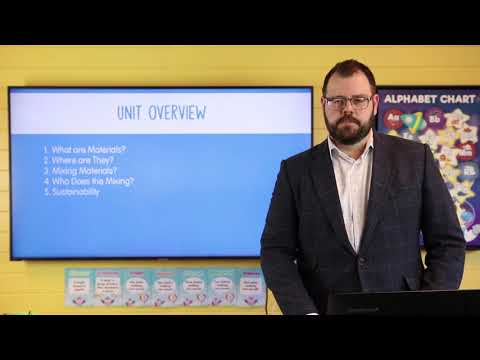
This unit covers the Chemical Sciences portion of the Australian Curriculum for year 2. Through a series of presentations, hands-on activities, and worksheets, students will develop an understanding of the materials they interact with day to day, and how they’re combined to make the world around them.
Different materials can be combined for a particular purpose
Science involves observing, asking questions about, and describing changes in, objects and events
People use science in their daily lives, including when caring for their environment and living things
Pose and respond to questions, and make predictions about familiar objects and events
Participate in guided investigations to explore and answer questions
Use informal measurements to collect and record observations, using digital technologies as appropriate
Use a range of methods to sort information, including drawings and provided tables and through discussion, compare observations with predictions
Compare observations with those of others
Represent and communicate observations and ideas in a variety of ways
Observes, questions and collects data to communicate and compare ideas
Uses materials, tools and equipment to develop solutions for a need or opportunity
Describes, follows and represents algorithms to solve problems
Describes observable features of living things and their environments
Identifies how plants and animals are used for food and fibre products
Identifies that materials can be changed or combined
Describes how the properties of materials determine their use
Describes common forms of energy and explores some characteristics of sound energy
Investigates how forces and energy are used in products
Recognises observable changes occurring in the sky and on the land and identifies Earth’s resources
Identifies the components of digital systems and explores how data is represented
People use science in their daily lives
Respond to and pose questions, and make predictions about familiar objects and events
Participate in guided investigations, including making observations using the senses, to explore and answer questions
Use informal measurements in the collection and recording of observations
Use a range of methods, including drawings and provided tables, to sort information
Compare observations and predictions with those of others
Represent and communicate observations and ideas about changes in objects and events in a variety of ways
In this unit students explore the following concepts;
 Lesson 1
What are Materials?
Lesson 1
What are Materials?
In this lesson, students will learn what materials are.
 Lesson 2
Where are they?
Lesson 2
Where are they?
This lesson will have students will find examples of materials they discussed in the previous lesson.
 Lesson 3
Mixing Materials
Lesson 3
Mixing Materials
Students will investigate mixed materials and why they are combined.
 Lesson 4
Who Does the Mixing?
Lesson 4
Who Does the Mixing?
In this lesson, students will learn about the people who put all these materials together.
 Lesson 5
Sustainability
Lesson 5
Sustainability
Students learn about the impact that materials have on our environment.
Designed in a science theme, this set of WALT, WILF & TIB charts have been created specifically to support classroom science units of work....
Create a science themed word wall to support your classroom science units. Add your chosen vocabulary to the word wall. Make blank cards acc...
This first presentation is designed as refresher to some of the content that students should have learned at a foundation level. Students le...
This presentation helps students turn their attention to the built world around them to recognise the materials, and combinations of materia...
In this presentation, students learn why designers and engineers often mix materials. Like a superhero team, a mix of materials allows the s...
In this presentation, student learn about the different careers that are built around using materials to solve design problems, namely inven...
During this presentation, students explore the environmental impacts that come from material choices, and the importance of choosing materia...
Students set off around the classroom or playground in search of examples of each category of material. This worksheet can be done as a comp...
Take a look at materials in the classroom that are made by mixing materials.
Take a closer look at some jobs that require people to choose the most appropriate materials for the job.
Identify the materials that are sustainable and list the reasons.
Choose an item that can be recycled and explain how you would use it.
This teacher sheet outline the instructions for a recycling activity where students turn scrap paper into beautiful, handmade paper bookmark...
Students are asked to reflect on the importance of recycling through either writing or drawing. This worksheet was designed to be used with...