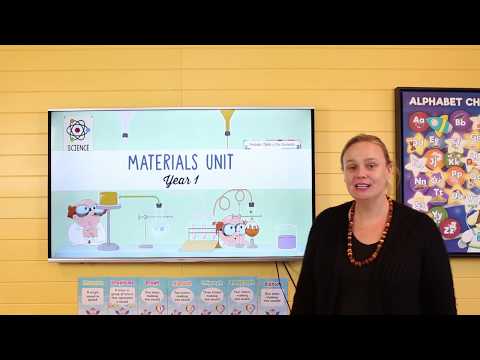
This lesson will review what materials certain objects are made from.
Everyday materials can be physically changed in a variety of ways
Science involves observing, asking questions about, and describing changes in, objects and events
People use science in their daily lives, including when caring for their environment and living things
Pose and respond to questions, and make predictions about familiar objects and events
Use informal measurements to collect and record observations, using digital technologies as appropriate
Use a range of methods to sort information, including drawings and provided tables and through discussion, compare observations with predictions
Compare observations with those of others
Represent and communicate observations and ideas in a variety of ways
People use science in their daily lives
Everyday materials can be physically changed or combined with other materials in a variety of ways for particular purposes
Respond to and pose questions, and make predictions about familiar objects and events
Use informal measurements in the collection and recording of observations
Use a range of methods, including drawings and provided tables, to sort information
Compare observations and predictions with those of others
Represent and communicate observations and ideas about changes in objects and events in a variety of ways
Observes, questions and collects data to communicate and compare ideas
Uses materials, tools and equipment to develop solutions for a need or opportunity
Describes, follows and represents algorithms to solve problems
Describes observable features of living things and their environments
Identifies how plants and animals are used for food and fibre products
Identifies that materials can be changed or combined
Describes how the properties of materials determine their use
Describes common forms of energy and explores some characteristics of sound energy
Investigates how forces and energy are used in products
Recognises observable changes occurring in the sky and on the land and identifies Earth’s resources
Identifies the components of digital systems and explores how data is represented
These charts describe each of the five senses: taste, touch, smell, hearing and sight.
The WALT, WILF & TIB posters were created by request and consist of 14 pages including: WALT - We are learning to... WILF - What I'm...
Students will use their observation skills to identify the materials various objects are made from. This forms part of the Foundation Che...
This banner has been designed to feature along your classroom Word Wall.
This set of blank word wall cards allows you to add vocabulary to your word wall as the need arises. Create your own customised word wall ba...
Designed in a science theme, this set of WALT, WILF & TIB charts have been created specifically to support classroom science units of work....
Create a science themed word wall to support your classroom science units. Add your chosen vocabulary to the word wall. Make blank cards acc...
Science involves observing, asking questions about, and describing changes in, objects and events.We wrote this song to support students as...
Students will identify the materials from which a number of common items are made. This forms part of the Year 1 Chemical Sciences Unit -...